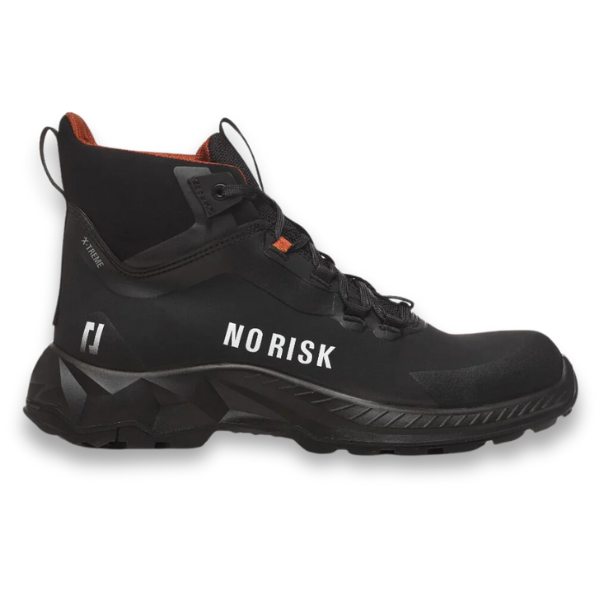

How to Choose the Optimal Safety Boots for Your Industry
Find the best protection and comfort—whether you're on a construction site or in a warehouse.
When it comes to safety footwear, there’s no one-size-fits-all solution. The boots you wear should match the demands of your job—whether you’re on your feet all day in a warehouse, braving the outdoors on a construction site, or working around heavy machinery. With so many options on the market, choosing the right pair can feel overwhelming.
In this guide, we’ll walk you through how to pick the optimal safety boots depending on your sector, and what to look for when deciding between composite toecap boots and steel toecap boots. Plus, we’ll point you to the best men’s work boots for a range of environments.
1. Understand the Safety Risks in Your Industry
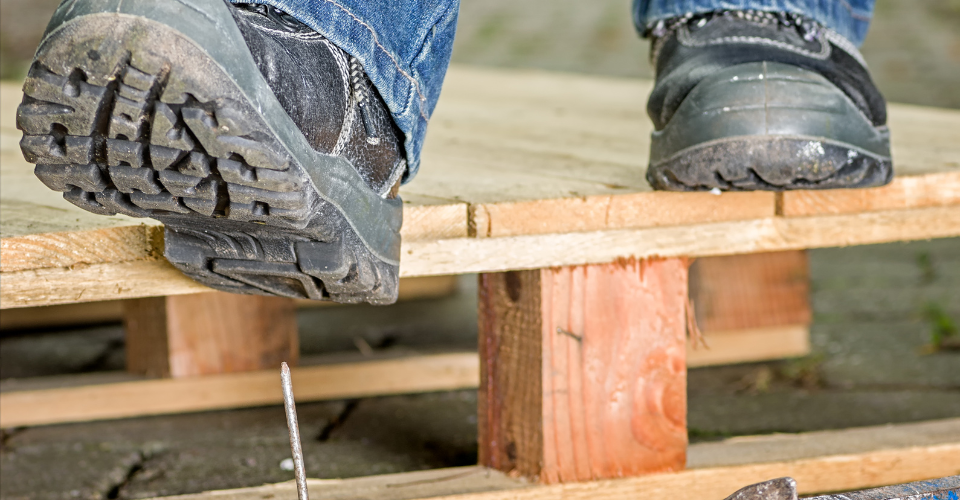
The first step in choosing the right safety boots is identifying the risks in your workplace. Here’s a quick breakdown of common sectors and their typical safety needs:
- Construction & Trades: Protection from falling objects, sharp debris, punctures, and slips.
- Warehouse & Logistics: Long hours on hard floors, moving equipment, and potential for impact injuries.
- Outdoor Work (e.g. utilities, landscaping): Exposure to wet, cold, and uneven terrain.
- Manufacturing & Factory Settings: Risk of heavy objects, hot surfaces, and chemicals.
- Food Processing or Cleanroom Environments: Need for hygiene, slip resistance, and waterproofing.
By identifying the specific hazards in your field, you can filter out the features you don’t need and focus on the ones that really matter.
2. Choose Between Composite and Steel Toecaps
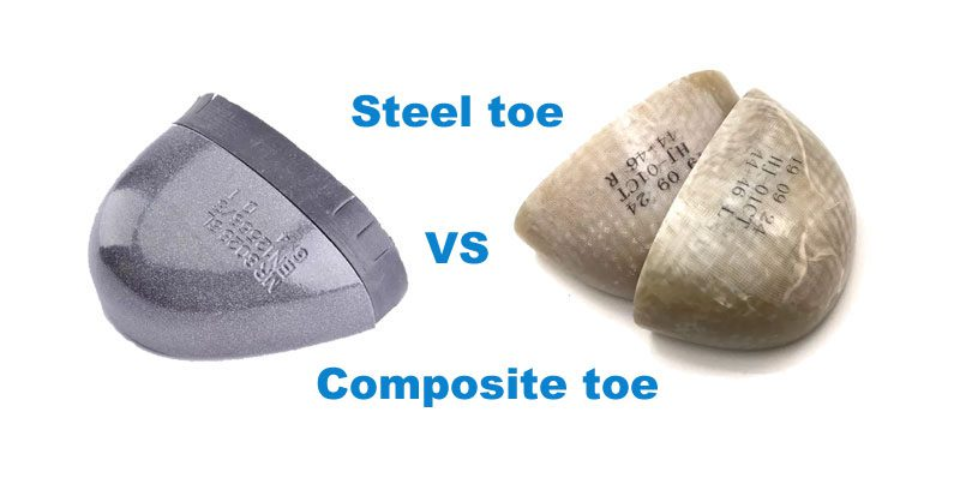
When it comes to toe protection, there are two main types: composite toecap boots and steel toecap boots. Each has its pros and cons depending on your sector.
Steel Toecap Boots
Steel toecaps are the classic choice. They’re tough, tested, and ideal for heavy-duty environments. Best for: Construction, demolition, metalwork, and any high-risk site with potential for falling objects.
Pros:
- Extremely strong and impact-resistant
- Often cheaper than composite options
Cons:
- Heavier, which can cause fatigue over long shifts
- Conducts heat and cold, so not ideal for extreme weather
Composite Toecap Boots
These are made from materials like fibreglass, plastic, or carbon fibre. They're lightweight and don’t conduct temperature or electricity. Best for: Electricians, airport workers, and anyone who walks a lot or works in metal-free environments.
Pros:
- Lighter and more comfortable for all-day wear
- Metal-free: won’t set off metal detectors
- Better insulation against heat or cold
Cons:
- Slightly bulkier than steel
- Can be more expensive
âž¡ï¸ Tip: If your job involves walking long distances or going through security checks, composite toecap boots are likely the better choice.
3. Prioritise Comfort, Fit and Extra Features
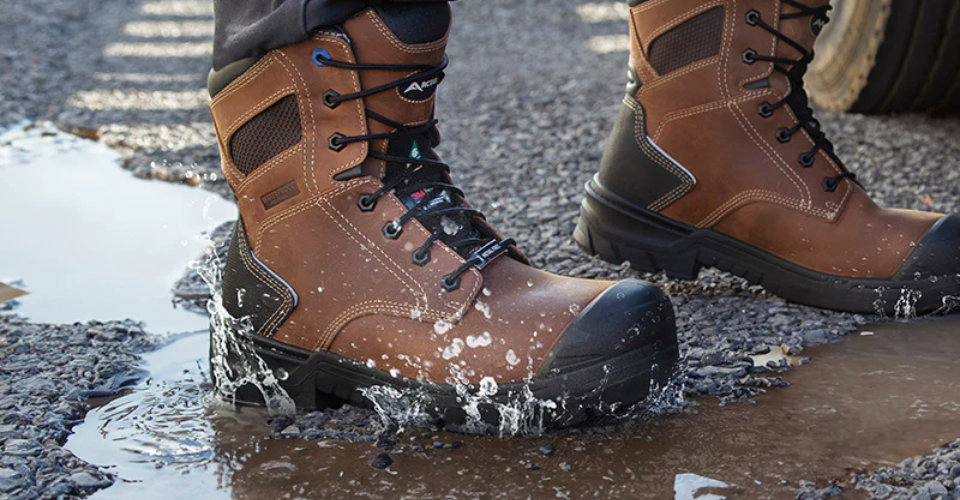
While protection is key, you’ll also want boots that are comfortable enough for full shifts. Look for features like:
- Cushioned insoles or shock absorption
- Breathable linings to reduce sweat and odour
- Waterproof membranes for wet conditions
- Slip-resistant soles (especially for warehouse, kitchen or outdoor work)
- Side zips for easy on/off (without compromising safety)
Some of the best men’s work boots combine multiple features—like waterproofing, insulation, and a comfort footbed—without feeling bulky or stiff.
âž¡ï¸ Don’t forget to try on boots with the socks you typically wear at work. Fit can vary by brand, and a snug (but not tight) fit will reduce fatigue and avoid blisters.
4. Match Your Boot Style to Your Sector

The design of the boot matters just as much as its specs. Here are some common styles and when to choose them:
- Lace-up boots with ankle support: Great for construction or uneven terrain
- Slip-on or elastic-sided boots: Ideal for quick on/off in clean environments like food processing or healthcare
- Rigger boots or wellingtons: Best for muddy, wet outdoor conditions
- Safety trainers: Lightweight and flexible for warehousing or logistics work
Each industry tends to favour certain styles—if you’re not sure, check what others in your field are wearing, or ask your employer if they have safety requirements.
The right safety boots will protect your feet, support your posture, and keep you comfortable on the job. Whether you need tough steel toecap protection or prefer the lightweight comfort of composite toecap boots, take the time to match the boot to your specific job environment. Your feet (and back) will thank you!
And if you’re looking for a reliable pair to start with, check out our collection of the best men’s work boots—carefully selected for performance, comfort, and value.
👉 Browse our full range of safety footwear here
Or get in touch if you’d like personalised advice—we’re always happy to help you find the perfect fit.
Most Recent
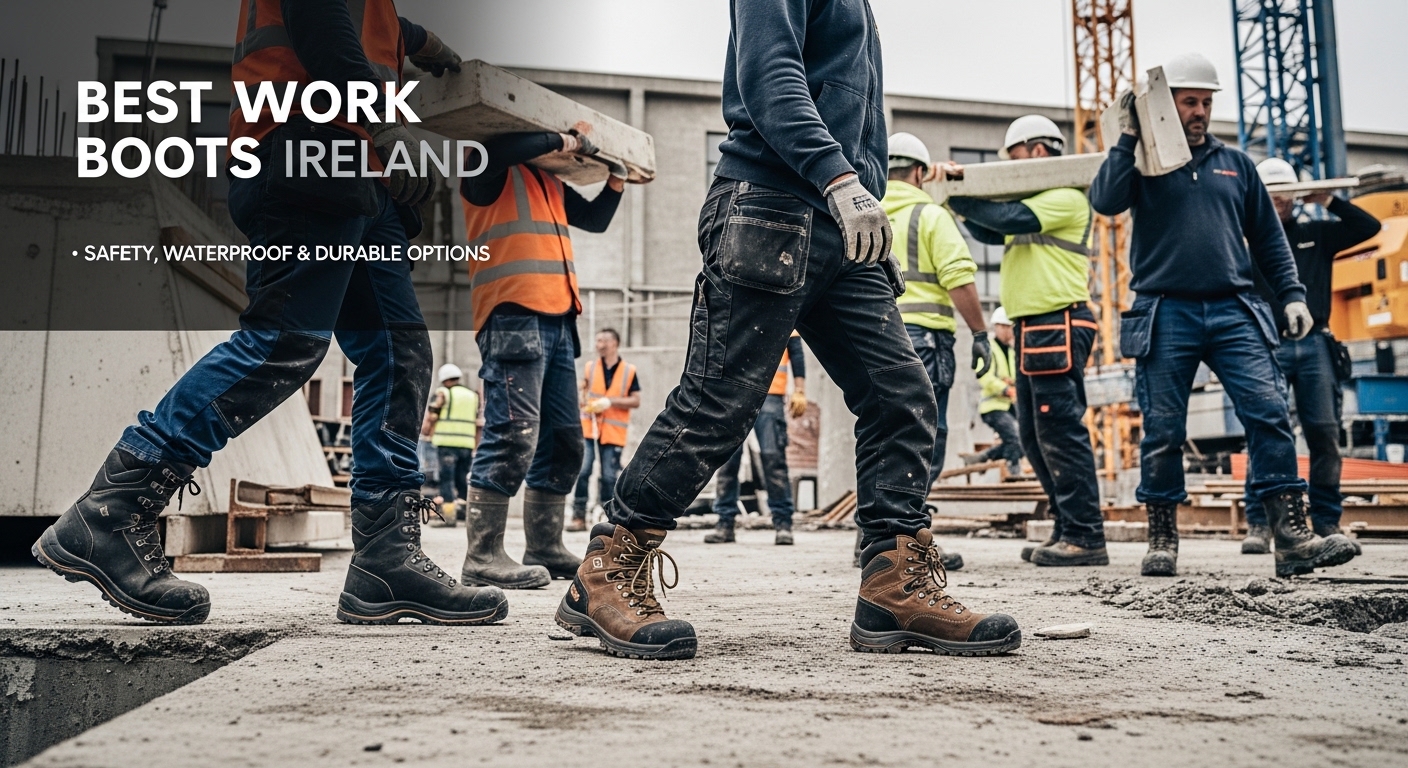
Best Work Boots Ireland: Top Picks for Safety, Comfort & Durability
Read more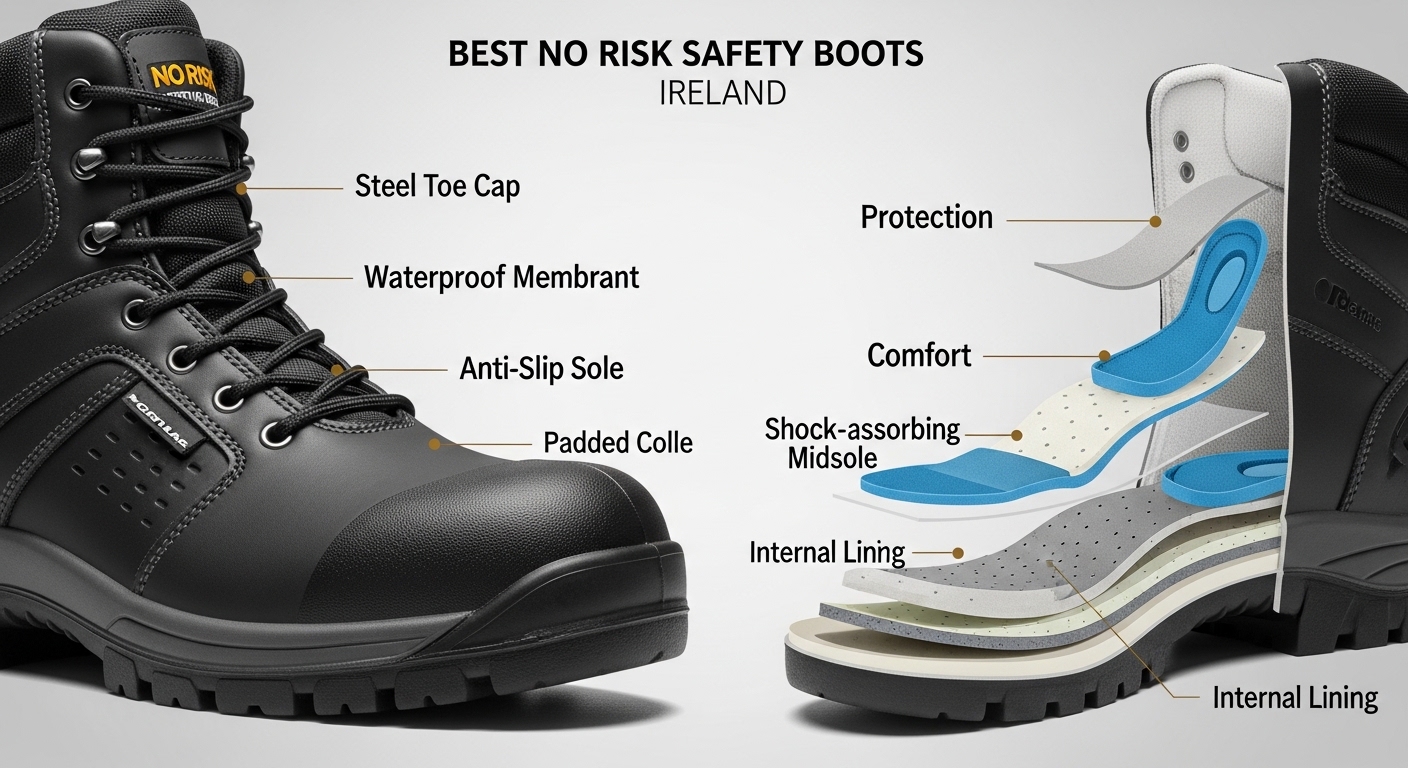
Best No Risk Safety Boots Ireland: Features, Protection & Comfort Explained
Read more
Need Waterproof Work Boots in Ireland for Your Team? Here’s What to Know
Read more
Why Choose Dunlop Rubber Rigger Boots for Industrial & Site Work?
Read more